Rent Concrete Blocks to secure Tents and Inflatables in Phoenix, Chandler, Gilbert, or Glendale Arizona
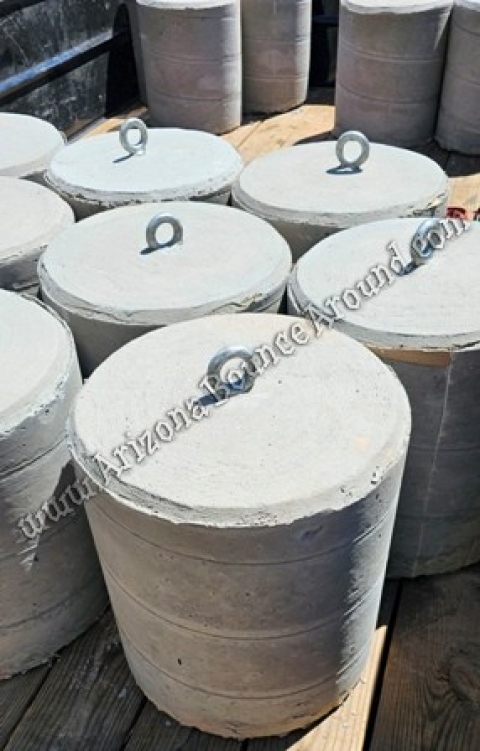
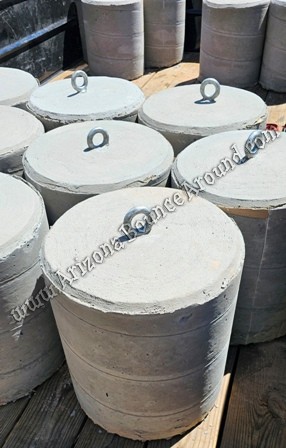
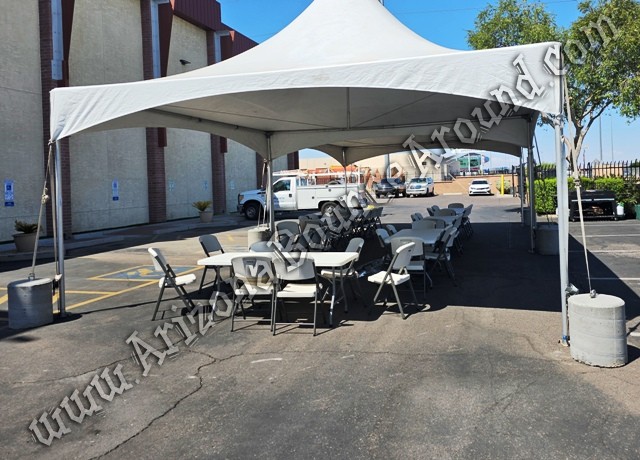
Our Concrete Anchor Weights are 450 pounds each and much better than the Block and Roll Concrete blocks because they take up less space around the tent leg and look better. Rent Concrete Blocks for Tents in Phoenix Arizona
.jpg)
.jpg)
| Base Rental: | $35.00 / 4 Hours when Delivered or 24 hours when picked up hours |
Rent Concrete Blocks by calling 480-874-3470
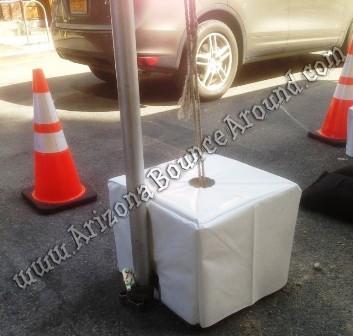
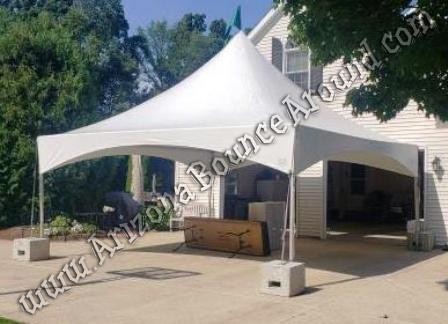
Block and Roll invented some really cool 350-pound square blocks for securing tents but they are 20" x 20" x 12" tall and the 500-pound block and roll are 20" x 20" x 16.5" tall
Our Blocks are 450 pounds each, 18" in diameter, and 20" tall making them look much nicer and giving you more space under the tent. Compare the square blocks to our round blocks in the pictures for a better idea.
Ensure event stability in Phoenix, Chandler, Gilbert, or Glendale, AZ by renting concrete blocks for tents and inflatables. Secure your event effortlessly.
Renting Concrete Blocks for Event Stability
Planning an outdoor event comes with a unique set of logistical challenges. From securing massive festival tents against unpredictable winds to creating temporary perimeters for crowd control, stability is non-negotiable. While stakes and water barrels are common, nothing offers the unwavering security of a heavy-duty
Whether you are organizing a weekend wedding, a massive music festival, or a corporate outdoor retreat, figuring out how to safely anchor your temporary structures is your top priority. But you probably don't want to purchase dozens of heavy blocks only to have to store them afterward. That is where renting comes in.
In this comprehensive guide, we will explore everything you need to know about renting and utilizing blocks for event stability, navigating local suppliers, and choosing the perfect materials for your specific needs.
Why Rely on Concrete for Event Stability?
When high winds roll in, standard tent stakes can easily be ripped from soft or over-saturated ground. Water barrels, while convenient to empty, can leak, shift, or fail to provide a low enough center of gravity.
Using big concrete blocks provides an immovable anchor point. Often referred to as ballast blocks or tent weights, these masonry units are strapped directly to the structural pillars of temporary event setups.
The Advantage of Solid Over Hollow
For maximum stability in a compact footprint, event organizers typically rely on solid concrete blocks. Unlike hollow core units, solid blocks offer maximum density. While a standard hollow block might weigh around 35 pounds, a solid block of the same dimensions is significantly heavier, providing maximum tie-down resistance. To put this in perspective, heavy-duty event ballasts can weigh anywhere from 300 to over 1,000 pounds each.
Sourcing Your Blocks: Renting vs. Buying
If you are a one-time event planner, purchasing massive masonry units makes little sense. However, if you are searching for "concrete blocks near me," you will quickly find that many local rental companies and masonry yards offer short-term leasing options for heavy ballast blocks.
When exploring your options, it is helpful to broaden your search terms. Searching for "cement blocks near me" or "event ballast rentals" can yield great local results.
If you are a frequent event host or venue owner considering permanent ownership, you might instead be wondering where to buy concrete blocks. In this case, establishing a relationship with a local supplier is key.
Mastering the Logistics of Heavy Masonry
Moving several tons of concrete is not a task for the faint of heart. When coordinating your rentals or purchases, always inquire about local masonry supply store delivery options. Many suppliers offer flatbed delivery with an attached forklift (Moffett), allowing them to place the blocks exactly where your event tents will be pitched.
If you are operating on a strict budget for a smaller community event, you might consider renting a truck for DIY block hauling. If you go this route, ensure your rental truck has the appropriate payload capacity. Overloading a vehicle with dense masonry is a severe safety hazard.
Decoding Block Specifications for Your Event
Understanding exactly what type of block you need prevents both safety risks and budget blowouts. Whether you are building a temporary barrier or anchoring a canopy, or Inflatable, specs matter.
Size and Weight Requirements
Before finalizing your rental or purchase, consult a standard
Strength and Durability
While you aren't building a skyscraper, the compressive strength of various CMU types still matters, especially if blocks will be stacked or subjected to heavy ratcheting forces from tent straps.
It is also worth noting the fundamental differences in materials. For instance, if you are looking at concrete versus cinder blocks for retaining walls, you'll learn that true concrete is significantly denser and stronger than cinder (which uses lighter aggregate). For event ballasts, always insist on true, high-density concrete. Leave the lighter cinder units for low-stress garden projects.
Similarly, while construction crews use
Creating Aesthetically Pleasing Perimeters
Let's face it: industrial masonry isn't always the most visually appealing addition to a luxury wedding or high-end corporate gala. Fortunately, you don't have to sacrifice aesthetics for safety.
Camouflaging Event Ballasts
Most professional event companies use custom-fitted white or black vinyl covers to drop over large ballast blocks, transforming them into sleek, unobtrusive boxes. You can also top them with potted plants or use them as bases for temporary event signage.
Designing Temporary Fencing and Walls
Sometimes, you need blocks not just for weights, but to build temporary crowd-control walls or VIP perimeters.
- Decorative Options: Consider incorporating decorative screen blocks for landscape design. These patterned blocks (often called breeze blocks) can be temporarily stacked to create beautiful, mid-century modern-inspired partitions that allow airflow while separating event spaces.
- Dry Stacking: For temporary setups, installing dry stack concrete blocks for beginners is an easily learnable skill. Because you aren't using mortar, you can simply stack interlocking blocks to form temporary retaining walls or stage borders, then easily disassemble them when the event ends.
- Estimating Materials: Figuring out how many units you need for a temporary event wall uses the exact same math as calculating number of blocks for a garden wall. Simply divide the total length and height of your desired wall by the dimensions of a single block face.
If your event requires a massive perimeter, costs can add up quickly. Be sure to ask your supplier about bulk pricing for 8x8x16 hollow blocks to keep your temporary fencing budget manageable.
Transitioning from Temporary Events to Permanent Venues
If you own an outdoor event space, renting blocks repeatedly will eventually eat into your profit margins. Many venue owners eventually transition from temporary setups to building permanent, high-quality outdoor structures like pavilions, permanent retaining walls, and structured seating areas.
When you make the leap to permanent venue construction, the rules change significantly from temporary event planning.
Meeting Building Standards
Permanent masonry requires strict adherence to safety codes. You must familiarize yourself with residential building code requirements for masonry (or commercial codes, depending on your venue's zoning). This ensures that any permanent walls, stage foundations, or terraced seating will withstand years of heavy public use and extreme weather.
Longevity and Weather Resistance
Temporary blocks can simply be loaded back onto a truck. Permanent venue walls face the elements 365 days a year. Therefore, using a high-quality, weatherproof mortar mix for exterior walls is vital to prevent water intrusion, cracking, and structural failure over time.
Sustainability and Comfort
For venue owners constructing permanent indoor/outdoor hybrid event spaces, energy efficiency and eco-friendliness are growing priorities.
- Energy Efficiency: To keep your permanent event buildings cool in the summer and warm in the winter, look into insulated concrete masonry unit energy efficiency. These specialized blocks feature built-in thermal insulation, drastically reducing the heating and cooling costs of your event hall.
- Going Green: Modern event planners are highly conscious of their carbon footprints. You can build your permanent infrastructure sustainably by researching the environmental impact of fly ash concrete blocks. Fly ash is an industrial byproduct that, when used to replace a portion of traditional cement in block manufacturing, significantly lowers greenhouse gas emissions and keeps waste out of landfills.
Finding the Right Local Partner
Whether you need a dozen temporary ballasts for a weekend farmers market or a massive bulk order to build a permanent event pavilion, your success hinges on finding a reliable supplier.
Don't just pick the first result on a search engine. Take the time to read reviews and identify the top-rated Party Rental Supplier in my area. A great local supplier will act as a partner, helping you calculate weights, coordinate complex delivery logistics, and secure the exact type of masonry unit your event requires.
Final Thoughts on Event Stability
Never leave the safety of your event guests to chance. Unpredictable weather and high winds demand the steadfast reliability that only a heavy, properly placed concrete anchor can provide.